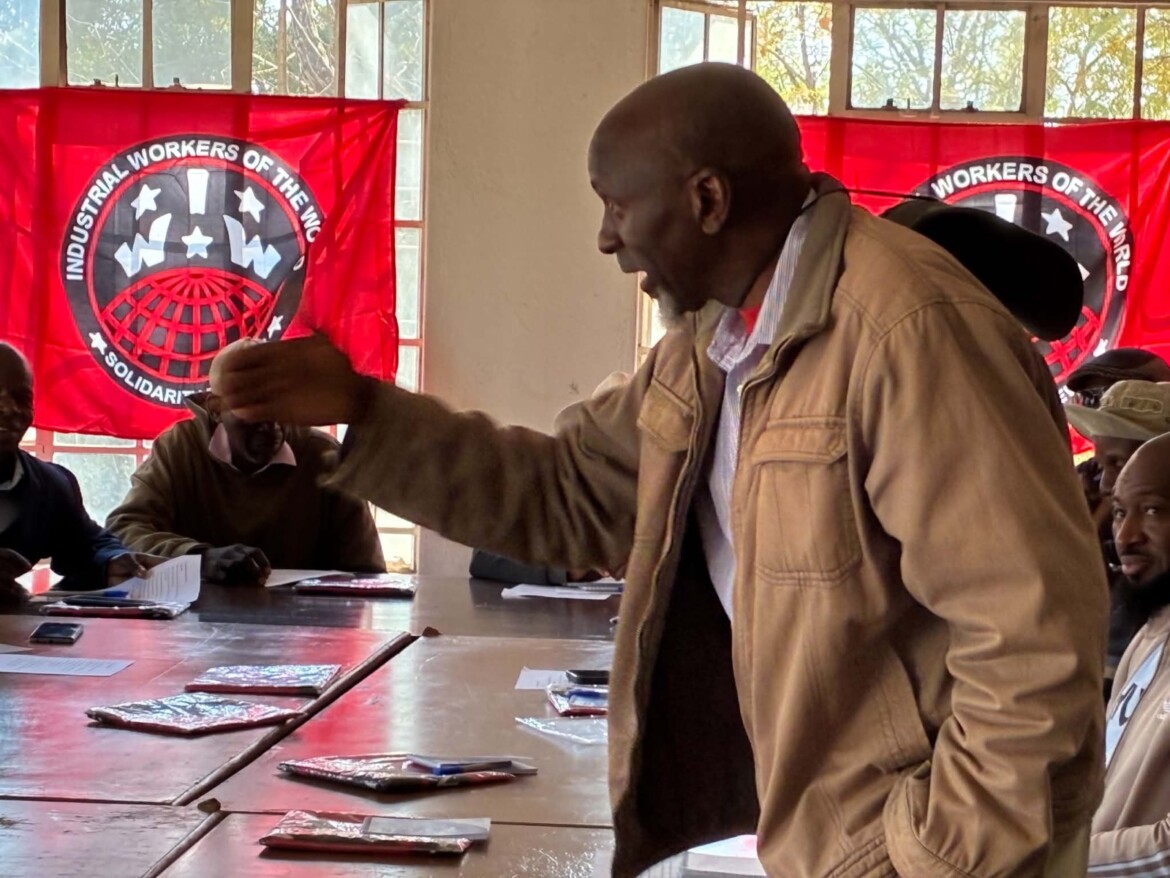
The Industrial Workers of the World (IWW) labour union is pleased to announce the formation of the new Regional Organising Committee for Zimbabwe (Zim-ROC).
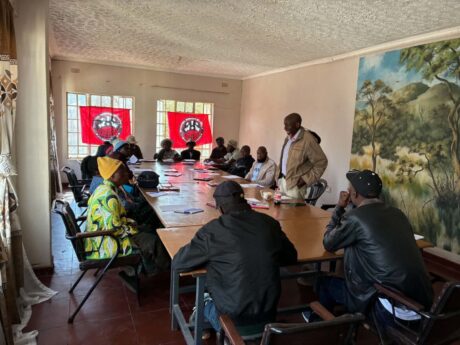
This new organizing committee was ratified by the union’s Delegate Council on the 16th September 2026. This process began in August 2026 when Contract Tobacco Farmers from the major tobacco-producing areas of Zimbabwe gathered in Harare for an organising workshop and to sign a petition to charter as an official ROC branch of the IWW.
Zim-ROC is now recognised as a formal democratic entity within the IWW WISE-RA (Wales, Ireland, Scotland, England – Regional Area) to structure IWW union organising in the Southern African region. Zim-ROC’s initial focus will be on organising contract tobacco farmers in Zimbabwe. To this end, the union has also launched the IWW Tobacco Farmers Union (TFU) to work alongside Zim-ROC to organise in the industry across Southern Africa more broadly.
Context
Modern-day tobacco production in Southern Africa involves large multinational companies contracting small-scale farmers to plant, nurture, harvest and cure the tobacco plants. Contract farmers do not have employee status. The tobacco companies will only buy tobacco from farmers who are contracted to them. Farmers can only sell their tobacco to the companies that have contracted them. Tobacco farmers are typically poor. The companies coerce farmers to take out loans from them to pay for the seeds, fertilisers and pesticides they require and that are sold to them by these same companies. The loans are paid off when the farmers sell their tobacco crop. When farmers come to sell their tobacco to the contracting companies the companies often only buy their tobacco up to the monetary amount that the farmers owe the company in loans. Their hard labour in harsh conditions therefore goes unpaid. Their position is made even more precarious because the companies have divested all of the risks involved in farming, including floods and droughts, onto them. Any deficiencies in crop quantity or quality at the end of the farming season can leave loans unpaid and families trapped in spirals of debt from one year to another. The farmers’ struggles are largely invisible to the outside world.
This labour exploitation has been rightly categorised as modern-day slavery in an award-winning film by Professor Roy Maconachie and Simon Wharf of the University of Bath, the Tobacco Control Research Group, and global tobacco industry watchdog, STOP ‘Tobacco Slave’. The film, ‘Tobacco Slave’, documents the plight of tobacco farmers in Malawi, also describes the impact of the slavery on health and welfare of families. Farmers often have little choice but to involve their young children in the hard agricultural labour in order to try and repay debts to the contracting companies.
Tobacco farming is dangerous work. In addition to being exposed to toxic pesticides, the exposure to tobacco sap during harvesting and processing can lead to a condition known as ‘Green Tobacco Sickness’ (GTS). This acute form of nicotine poisoning can have serious health effects including hospitalisation. Children, due to their smaller size, accumulate higher doses of the nicotine poison and get particularly sick. This results in many being too sick to attend school. A 2026 review of the prevalence, gender disparities and socioeconomic determinants of GTS have found that it highly prevalent among tobacco workers, particularly those in poorer countries, and that the prevalence in female tobacco workers is higher than that in male tobacco workers. Global Burden of Green Tobacco Sickness in Farm… : Indian Journal of Occupational and Environmental Medicine
“Accessing PPE is very important for the health and safety of our tobacco farmers. Many of us are getting sick
because we work without gloves, masks and overalls.
We believe that the issue of PPE cannot be ignored any longer. Our farmers are the backbone of this economy but they are working with bare hands and no protection.
The IWW is committed to pushing this agenda forward. Our lives and health matter.
A luta continua! / the struggle continues!”Alexander Matesanewa – Secretary of Zim-ROC
Public health officials have called for urgent action to protect these workers through improving working conditions and provision of appropriate personal protective equipment (PPE).
Zim-ROC/TWU Action in Southern Africa
It is estimated that there are around 150,000 contract tobacco farmers in Zimbabwe. However, the tobacco growing business model that has been developed by the companies creates challenges for labour organising. Farmers are often isolated geographically in rural and remote areas as well as isolated socially from each other. The companies contract with individuals. Loans are provided to individuals. Commodities such as fertiliser are sold to individuals. Tobacco is purchased from individuals. When the farmers are exploited and end up in debt the burden of it is internalised as individuals. There is little awareness among farmers of the scale of the exploitation, nor how their individual experiences and feelings are the norm among contract tobacco farmers in Zimbabwe and across Southern Africa. Their status may be considered a form of bogus self-employment that has been constructed in the interests of big business.
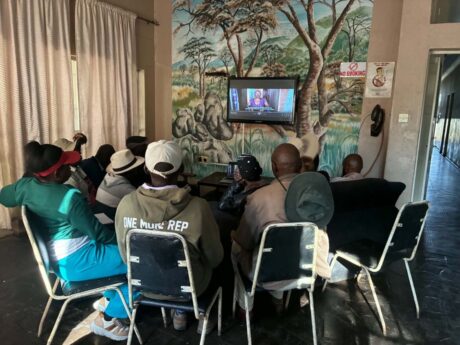
The film ‘Tobacco Slave’ was screened at the organising workshop held in Harare in August 2026. This was the moment when the scale and similarity of the exploitation became evident to many of the farmers present. The Malawian contract farmers in the film described experiences and emotions identical to theirs. They described company practices in Malawi that were identical to those used by companies in Zimbabwe. They were familiar with the signs and symptoms of sickness associated with harvesting tobacco but not that it was GTS and the result of nicotine poisoning. They didn’t know GTS could be prevented by Personal Protective Equipment (PPE). Those present recognised that ‘Tobacco Slave’, if it could be made accessible to farmers in local languages, could be a powerful tool. Community screenings of the film could be the catalyst for discussions, for solidarity, for union recruitment and grass-roots action. That grass-roots action could begin around making PPE available and protecting farmers and their families from GTS.
The bogus self-employment status and isolation makes it extremely difficult for contract farmers to organise through traditional union structures. The IWW offers a different approach. A community-based, grass-roots approach using direct action and supported by active international solidarity can give contract farmers a fighting union capable of taking on big corporations.
How can Fellow Workers around the world support Zim-ROC/TWU action?
While tobacco crops are grown in the Global South the big tobacco companies at the apex of this modern-day slavery are based in the Global North. In Europe, especially the UK. In North America, especially the USA. And in Asia, especially Japan.
The film-makers behind ‘Tobacco Slave’ are working with us to translate the film and make it accessible for community screenings in Southern Africa. Community screenings of ‘Tobacco Slave’ in the Global North could be key to creating international solidarity with the contract farmers’ struggle. The filmmakers have agreed to make the film available to us for such community screenings and even to attend screenings, where possible, to provide additional information and participate in discussions. The screenings could be a starting point for researching links between businesses in your city/country and the modern-day slavery happening in Southern Africa. They could lead to activists planning protests that target big tobacco businesses in the area. They could help raise funds or receive donations that can be transferred to Zim-ROC through the IWW WISE-RA Organising Department to help the organising campaign, and for the purchase and distribution of PPE to protect farmers and their families from Green Tobacco Sickness .
Some historical background
The IWW has a long and proud heritage of organising in Southern Africa, with a section known as the Industrial Workers of Africa in the 1920’s which was the first union in Africa that did not practice segregation. The IWW led several strikes of both black and white workers in the mines and on the railways.
Zim-ROC, the Zimbabwe Regional Organising Committee, marks the first formal IWW activity on the African continent since IWW members organising in Sierra Leone’s diamond mines were forced into exile during the country’s civil war (1991-2002).
The workers of the world, united, will never be defeated!
Donate to Zim-ROC here: Tobacco Farmers Fight Back | Chuffed | Non-profit charity and social enterprise fundraising